
Pegasus Bay and the Lost Art of Vision

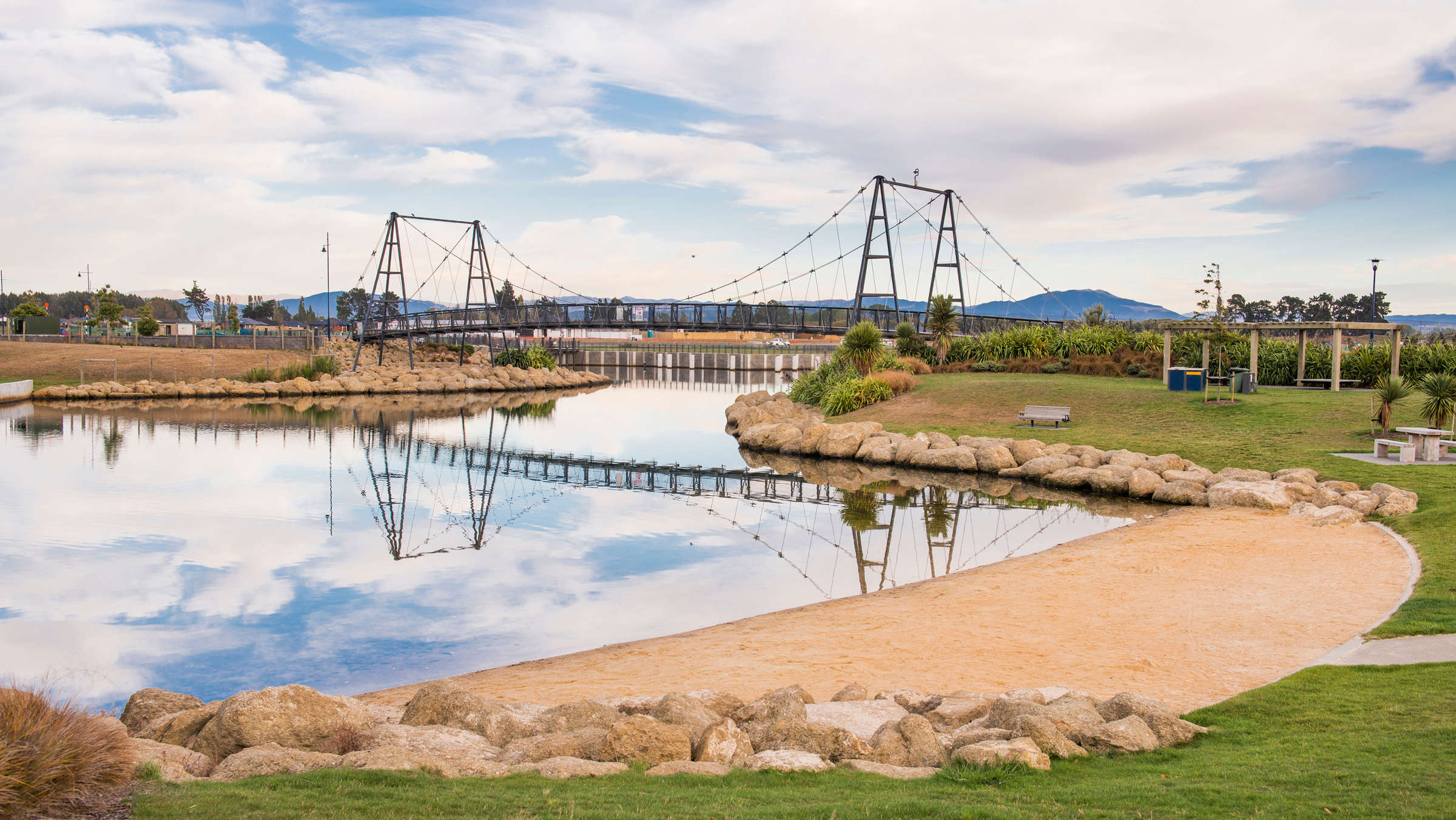
What a 1995 new town can teach us about today’s RMA reform and spatial planning
In 1995, just four years after the Resource Management Act came into force, Common Ground was commissioned to design a new town at Pegasus Bay, north of Christchurch. It was one of the first privately led plan changes under the new Act, undertaken at a time when the planning profession itself was still grappling with what the RMA meant — and what it could enable. What emerged was Pegasus Bay Sustainable Town: a complete urban framework grounded in sustainability, community, and long-term thinking. It proposed a settlement with its own centre, its own identity, and its own environmental logic. It was compact, walkable, mixed-use, and ecologically regenerative — decades before these ideas became mainstream.
At its heart was a simple premise:
Urban development should be guided by vision, not regulation alone.
The RMA was never the problem
The Resource Management Act was, and remains, an enabling piece of legislation. It did not prescribe what towns should look like — it created space for communities and designers to define that for themselves. Pegasus Bay demonstrated what was possible when that freedom was taken seriously. The project wasn’t driven by minimum lot sizes, infrastructure schedules, or yield targets. It was driven by a question:
What should a town for the next century look like?
The answer was a framework that integrated landscape, infrastructure, community, and urban form into a coherent whole. It recognised that development could restore ecosystems rather than degrade them. That communities could be designed around civic life rather than roads. That infrastructure could follow urban form, rather than dictate it. It was spatial planning before spatial planning existed as a formal discipline in New Zealand.
Somewhere along the way, we lost confidence in vision
Over the past thirty years, planning has increasingly become procedural - We have become very good at managing effects and less good at defining outcomes. The RMA continually was interpreted conservatively. Plan changes became rare. Innovation became risky. Growth was delivered incrementally, through subdivisions at the edges of towns rather than through the deliberate creation of new places.
The result is visible across the country: fragmented growth, car-dependent communities, and settlements that struggle to develop identity or civic life. This was never inevitable and Pegasus Bay showed another path.
Spatial planning is a chance to rediscover intent
The proposed reform of the RMA, and the increasing emphasis on spatial planning, represents an opportunity to rediscover something the profession has not consistently exercised for a generation: intent. Spatial planning, at its best, is not about drawing growth boundaries or allocating zoning, It is about defining the future structure of places.
It asks:
Where should growth occur?
What form should it take?
What kind of communities are we creating?
These are fundamentally design questions and they require vision. The risk, however, is that spatial planning becomes simply another layer of process — another set of maps without narrative, without authorship, and without ambition. And if that happens, we will have learned nothing.
The real sigificance Pegasus Bay provided was not because it was built exactly as Common Ground proposed (it wasn’t). Its importance lies in what it represented.
It demonstrated that:
- The planning system could enable new towns
- Private plan changes could be vehicles for innovation
- Urban design could lead planning, rather than follow it
- Development could be both commercially viable and environmentally regenerative
Most importantly, it showed that towns could be conceived as coherent, long-term propositions — not simply as the accumulation of individual development decisions. It was an act of confidence in the future.
We need that confidence again
New Zealand is entering a period of profound change. Population growth, climate adaptation, housing demand, and infrastructure constraints will require new forms of settlement. The status quo is shown as not sufficient but Spatial planning provides the mechanism.
But! Mechanism alone is not enough, instead we need vision.
We need clients, councils, and designers willing to think beyond the next consent, the next election cycle, or the next development stage. We need to rediscover the idea that towns can be designed. Pegasus Bay reminds us that this is not a new idea, and there are other case studies since then showing proposed new settlements, It is simply an idea we need to have the courage to pursue again.
At Common Ground, Pegasus Bay remains a reminder that planning is not just about managing change.
It is about imagining it.
See the project here!
Related Articles

Common
Ground

